LPG
Products
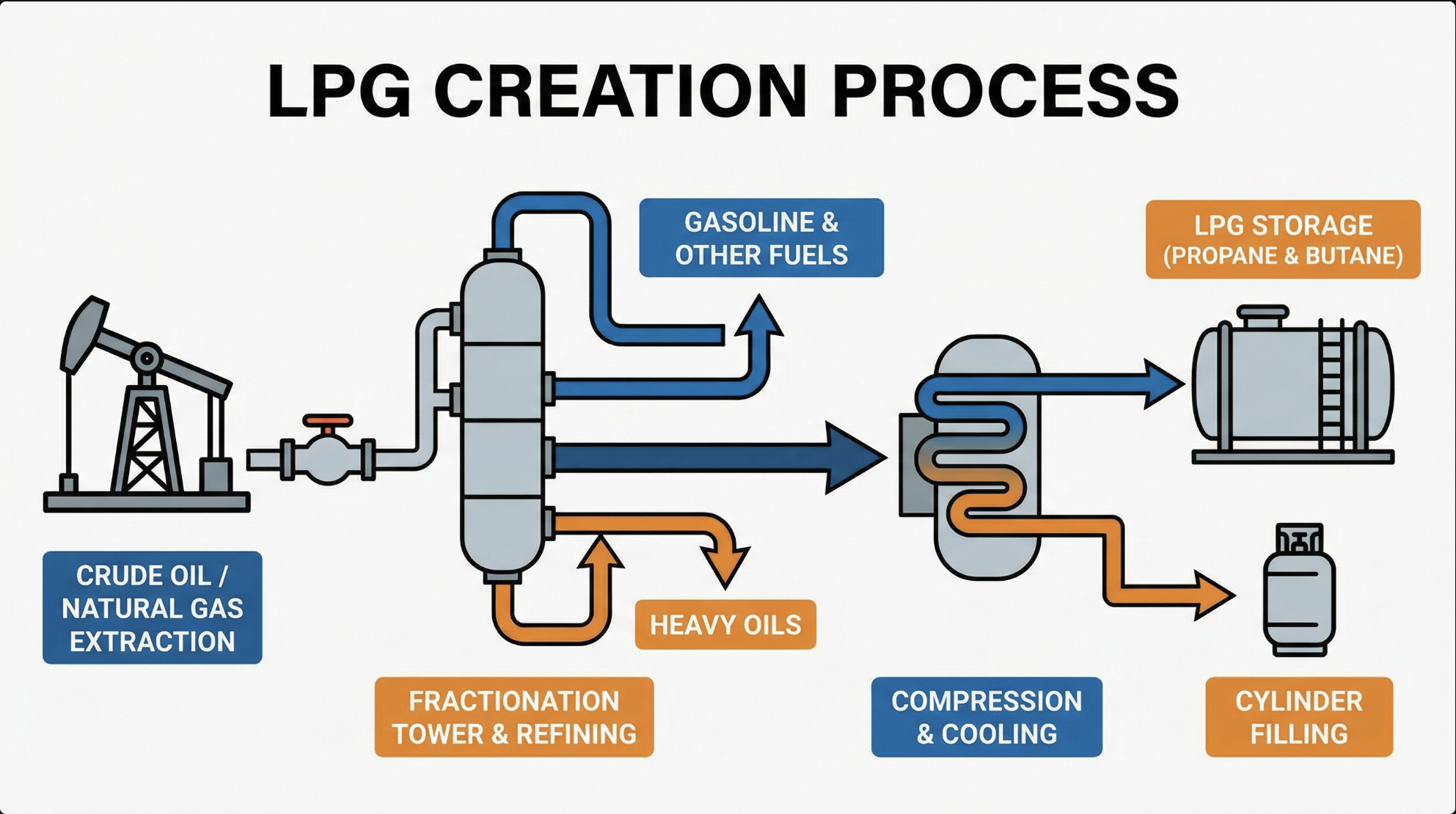
Liquefied Petroleum Gas (LPG) is a versatile hydrocarbon fuel primarily composed of propane and butane, produced as a byproduct of natural gas processing and crude oil refining. Stored in liquid form under moderate pressure, LPG offers a high energy density, ease of transport, and reliable performance across a wide range of applications.
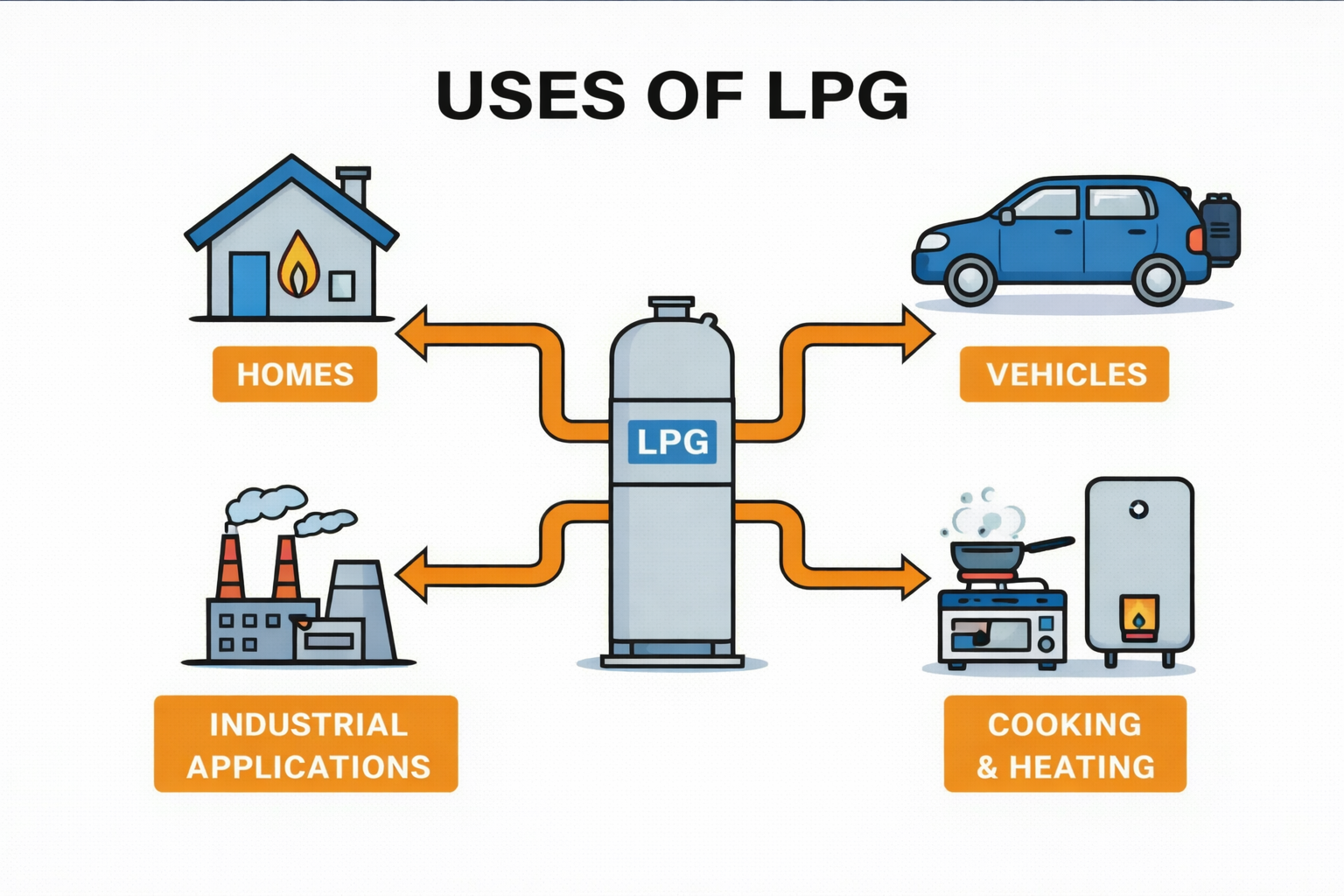
As a clean-burning and efficient fuel, LPG plays a critical role across residential, commercial, industrial, and agricultural sectors worldwide. It is widely used for heating, cooking, and hot water systems, particularly in regions without access to pipeline infrastructure. In industrial settings, LPG supports processes such as metal cutting, drying, and power generation, while in agriculture it is used for crop drying, greenhouse heating, and pest control. Compared to traditional solid and liquid fuels, LPG produces significantly lower emissions of carbon dioxide, particulate matter, and sulfur compounds, making it a preferred option for organizations seeking to reduce environmental impact while maintaining operational efficiency. Its portability and scalability further enhance its value, allowing for deployment in both urban centers and remote locations with minimal infrastructure requirements.
With its balance of performance, environmental advantages, and logistical flexibility, LPG continues to serve as a key component in the global energy mix. It supports energy security, enables cleaner transitions in developing markets, and provides a dependable solution for modern energy demands across diverse industries.
LPG
Liquefied Petroleum Gas (LPG) is a versatile hydrocarbon fuel primarily composed of propane and butane, produced as a byproduct of natural gas processing and crude oil refining. Stored in liquid form under moderate pressure, LPG offers a high energy density, ease of transport, and reliable performance across a wide range of applications.
-
As a clean-burning and efficient fuel, LPG plays a critical role across residential, commercial, industrial, and agricultural sectors worldwide. It is widely used for heating, cooking, and hot water systems, particularly in regions without access to pipeline infrastructure. In industrial settings, LPG supports processes such as metal cutting, drying, and power generation, while in agriculture it is used for crop drying, greenhouse heating, and pest control. Compared to traditional solid and liquid fuels, LPG produces significantly lower emissions of carbon dioxide, particulate matter, and sulfur compounds, making it a preferred option for organizations seeking to reduce environmental impact while maintaining operational efficiency. Its portability and scalability further enhance its value, allowing for deployment in both urban centers and remote locations with minimal infrastructure requirements.
With its balance of performance, environmental advantages, and logistical flexibility, LPG continues to serve as a key component in the global energy mix. It supports energy security, enables cleaner transitions in developing markets, and provides a dependable solution for modern energy demands across diverse industries.