Products
LNG
Liquefied Natural Gas (LNG) is a highly efficient and transportable form of natural gas, produced by cooling methane to extremely low temperatures, significantly reducing its volume for safe storage and global distribution, making it a key energy source in modern economies.
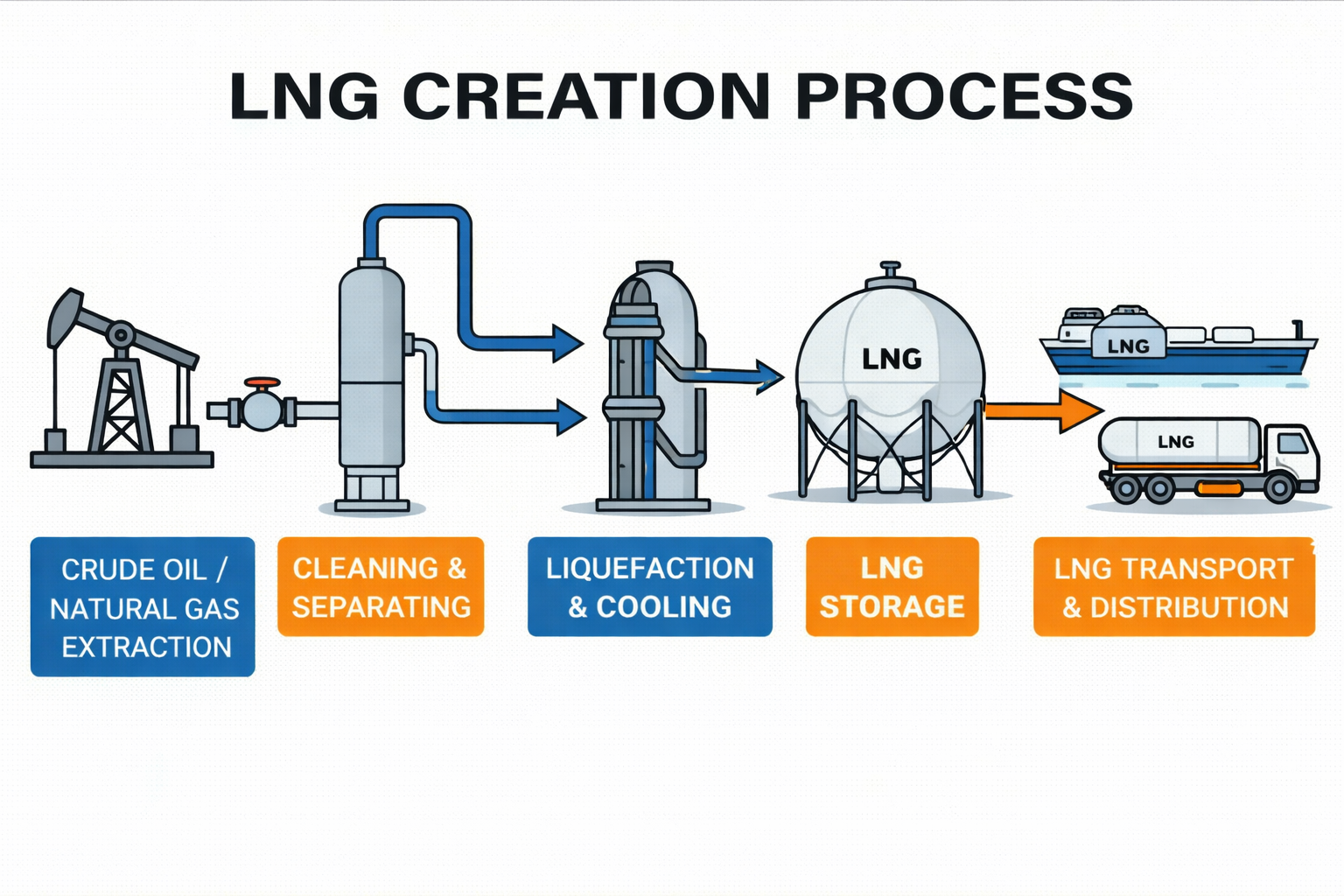
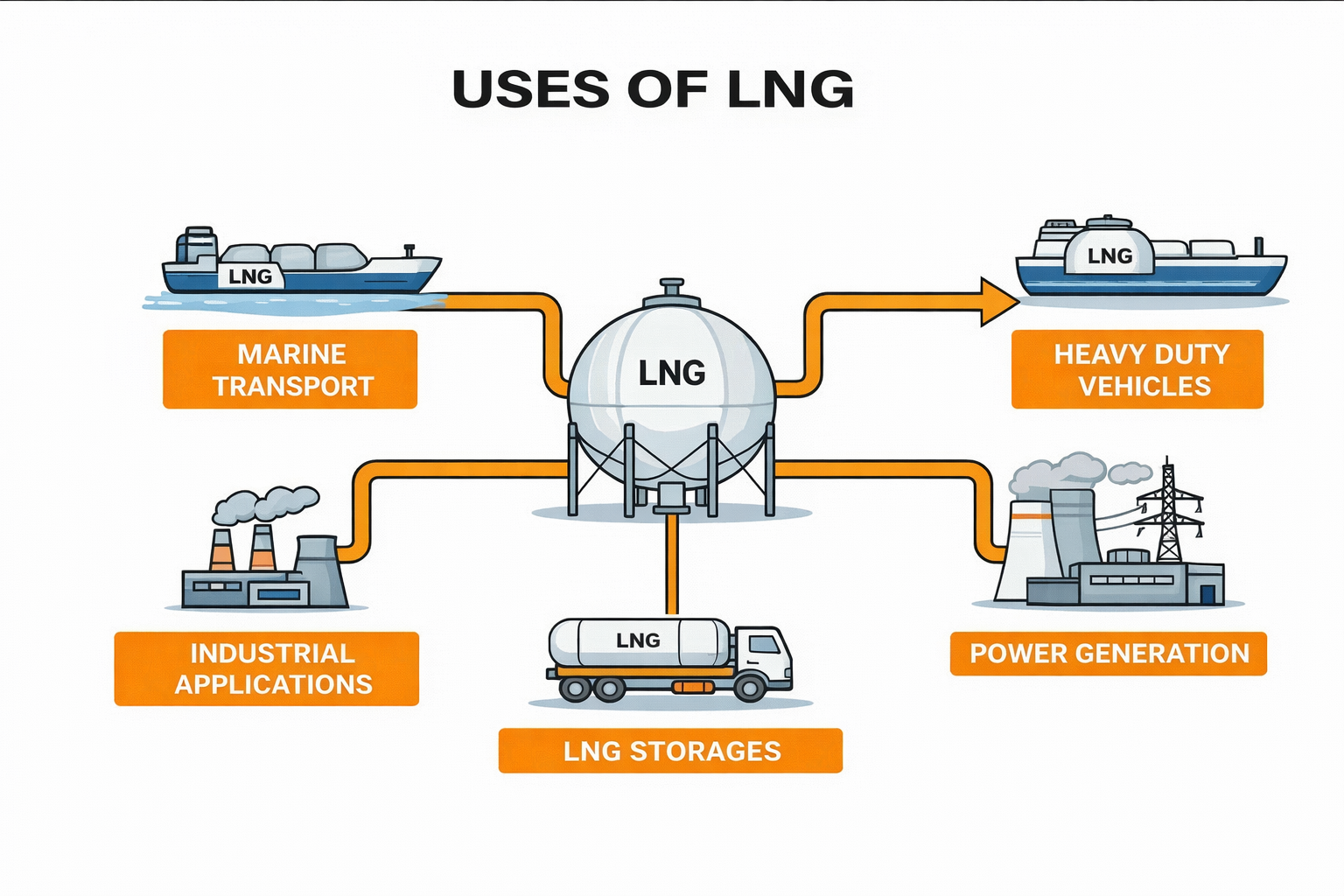
The LNG process begins with the extraction of natural gas, followed by purification to remove impurities such as carbon dioxide, water, and sulfur compounds. The purified gas is then cooled to approximately -160°C through a cryogenic process, transforming it into a liquid. This liquefied form allows for efficient storage and transportation via specialized tankers, after which it is regasified at its destination for use in power generation, heating, and industrial applications.
In countries like Bangladesh, LNG plays a vital role in supporting energy demand, particularly in electricity generation and industrial use. It provides a cleaner alternative to traditional fossil fuels such as coal and diesel, producing lower emissions while maintaining reliability. As energy needs grow, LNG continues to serve as a critical transition fuel toward a more sustainable energy future.
LNG
Liquefied Natural Gas (LNG) is a highly efficient and transportable form of natural gas, produced by cooling methane to extremely low temperatures, significantly reducing its volume for safe storage and global distribution, making it a key energy source in modern economies.
-
The LNG process begins with the extraction of natural gas, followed by purification to remove impurities such as carbon dioxide, water, and sulfur compounds. The purified gas is then cooled to approximately -160°C through a cryogenic process, transforming it into a liquid. This liquefied form allows for efficient storage and transportation via specialized tankers, after which it is regasified at its destination for use in power generation, heating, and industrial applications.
In countries like Bangladesh, LNG plays a vital role in supporting energy demand, particularly in electricity generation and industrial use. It provides a cleaner alternative to traditional fossil fuels such as coal and diesel, producing lower emissions while maintaining reliability. As energy needs grow, LNG continues to serve as a critical transition fuel toward a more sustainable energy future.